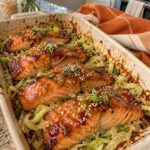
Maple Miso Baked Salmon with Sesame Cabbage
Salmon feels like a special dinner when the glaze does the heavy lifting. This maple miso baked salmon rests on a bed of sesame-scented cabbage, so the fish and vegetables finish cooking together in one baking dish. The glaze turns sticky and caramelized in the oven, while the cabbage soaks up the pan juices. It is an easy, one-dish approach that fits right in with the casseroles and bakes you already make on busy nights, and cleanup is simple too.
Why This Glaze Works
The glaze combines pure maple syrup, white miso paste, low-sodium soy sauce, apple cider vinegar, toasted sesame oil, garlic, and fresh ginger. Maple brings sweetness and helps the surface darken, while white miso adds mellow, savory depth. The soy sauce and vinegar keep the flavor balanced, so the glaze tastes bright rather than heavy. The ginger and garlic add warmth and a gentle bite that keeps the sweetness from feeling one-note.
Miso and soy sauce both contribute salt, so taste a small spoonful before you brush the glaze on. If it needs adjusting, a small nudge of soy sauce or maple syrup usually does the trick.
Getting a Sticky, Evenly Cooked Finish
Start with dry fish. Patting the salmon dry before seasoning and glazing keeps surface moisture from thinning the coating, so it clings and browns instead of sliding off. Place the skin-side-down fillets with a little space between them so the glaze can color all around each piece. Crowding the fillets traps moisture and steams the edges rather than letting them caramelize. Watch the dish near the end of baking, because maple and miso darken quickly. If the top browns faster than you like, loosely tent it with foil. Check doneness by the flakes and an instant-read thermometer, not color alone.
Sesame Cabbage That Soaks Up the Juices
The cabbage is more than a bed for the fish. Thinly sliced cabbage tossed with oil, salt, and pepper softens and wilts in the oven before the salmon goes on, so it turns tender instead of crisp. As the glaze and juices drip down, the leaves absorb them and take on savory, sesame flavor. Spooning the juices from the dish over the cabbage just before serving ties the whole meal together. Finish with toasted sesame seeds and scallions for nutty crunch and a fresh contrast to the sweet glaze.
Frequently Asked Questions
Why do I need to pat the salmon dry?
Surface moisture thins the glaze and stops it from clinging to the fish, so it can slide off or look watery instead of caramelizing. Patting the fillets dry before seasoning and glazing helps the coating stick and brown. It is a quick step that makes a visible difference in the finished, sticky surface.

How do I know when the salmon is done?
Look for a glaze that is sticky and caramelized, then test the thickest part of the fillet. It should flake easily with a fork and reach the temperature listed on the recipe card on an instant-read thermometer. If the glaze darkens too quickly, loosely tent the dish with foil.
What does the sesame cabbage add to the meal?
The cabbage softens in the oven and absorbs the glaze and pan juices, so every bite gets savory flavor. Toasted sesame seeds and scallions add nutty crunch and fresh bite at the end. Together they balance the sweetness of the maple glaze and make the dish feel complete on its own.
Maple Miso Baked Salmon with Sesame Cabbage
Course: Main CourseCuisine: AmericanDifficulty: Easy4
servings15
minutes22
minutes540
kcal37
minutesSalmon fillets are brushed with a maple, white miso and soy glaze and baked over sesame-scented cabbage until the glaze caramelizes and the fish is cooked through. The cabbage picks up the pan juices as it finishes in the oven.
Ingredients
- Maple miso glaze
1/4 cup pure maple syrup
2 tbsp white miso paste
2 tbsp low-sodium soy sauce
1 tbsp apple cider vinegar
1 tbsp toasted sesame oil
2 cloves garlic, minced
1 tsp grated fresh ginger
- Sesame cabbage
1 tsp olive oil, for greasing the dish
1 tbsp olive oil
1/2 medium head green cabbage (about 1 lb), thinly sliced
1/2 tsp kosher salt
1/4 tsp black pepper
- Salmon and garnish
4 skin-on salmon fillets (about 6 oz each), patted dry
1/2 tsp kosher salt
1/4 tsp black pepper
2 tbsp toasted sesame seeds
3 scallions, thinly sliced
Directions
- Set an oven rack in the center position and preheat the oven to 400°F. Grease a 9×13-inch baking dish with the 1 tsp olive oil.
- In a small bowl, whisk the maple syrup, miso, soy sauce, apple cider vinegar, sesame oil, garlic and ginger until smooth. Set aside.
- In the prepared dish, toss the sliced cabbage with the 1 tbsp olive oil, 1/2 tsp salt and 1/4 tsp pepper. Spread it into an even layer and bake for 10 minutes, until the cabbage has softened and started to wilt.
- Meanwhile, season the salmon on all sides with 1/2 tsp salt and 1/4 tsp pepper.
- Remove the dish from the oven. Arrange the salmon fillets skin side down over the cabbage, leaving a little space between them. Brush the glaze generously over the tops and sides of the fillets.
- Return the dish to the oven and bake for 12 minutes, until the glaze is sticky and caramelized and the thickest part of the salmon flakes easily with a fork and reaches 145°F on an instant-read thermometer.
- Spoon the juices from the bottom of the dish over the cabbage. Sprinkle the salmon and cabbage with the sesame seeds and scallions, then serve from the dish.
Notes
- Patting the salmon dry before seasoning and glazing helps the glaze cling and brown instead of thinning out in surface moisture.
- Maple syrup and miso darken quickly at 400°F. If the glaze browns faster than you like, loosely tent the dish with foil for the last few minutes of baking.
- Miso and soy sauce both add salt, so taste a little of the glaze before brushing it on and adjust with a few drops of soy sauce or a pinch of maple syrup if needed.
- Leftovers keep in an airtight container in the refrigerator for up to 3 days. Reheat gently so the salmon does not dry out.