Lemon Pudding Cake with a Silky Sauce Layer
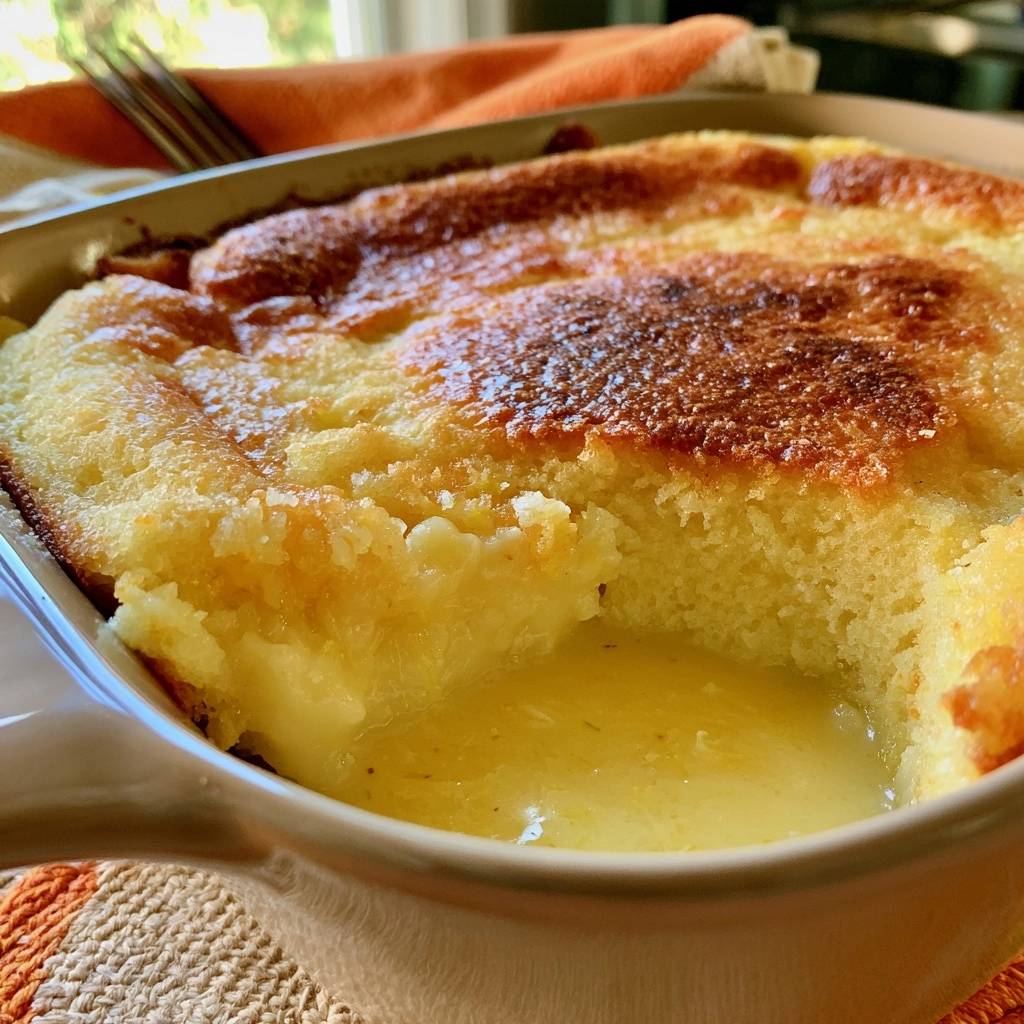
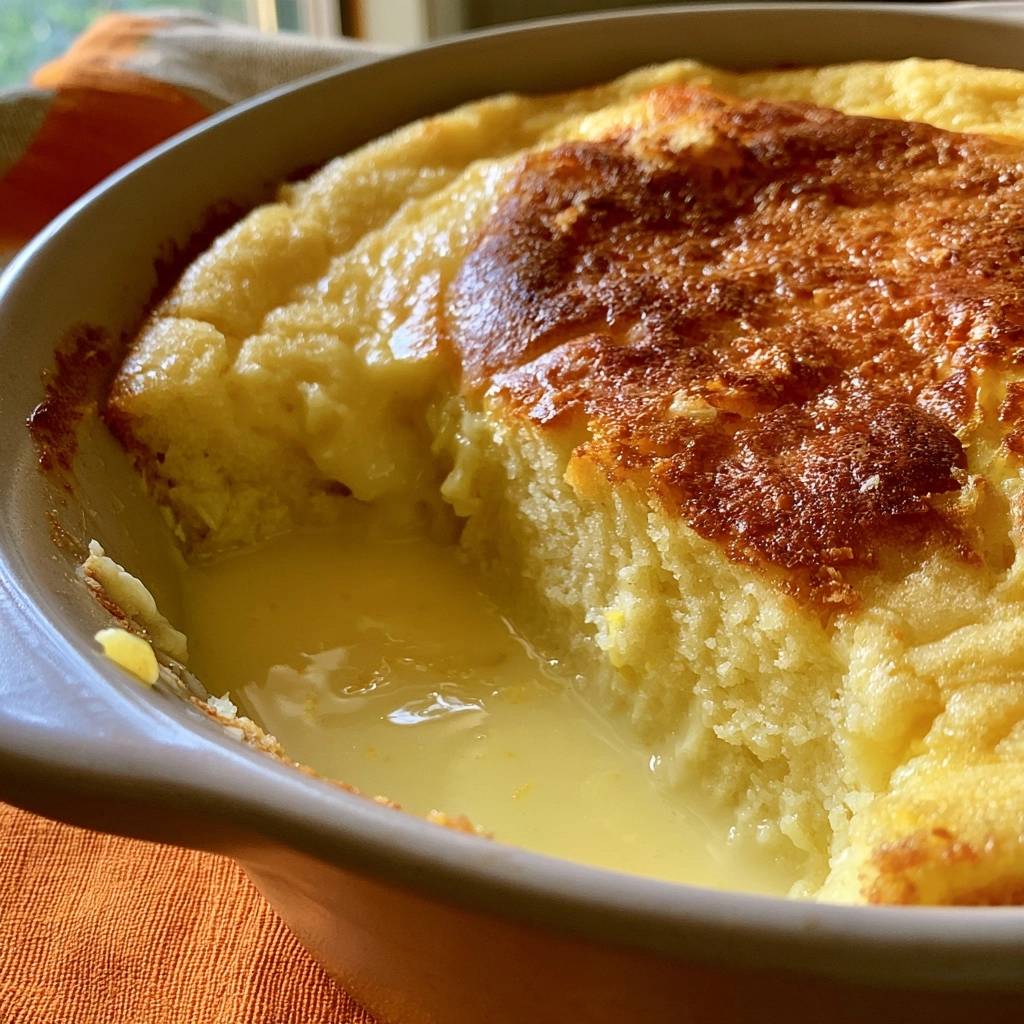
Lemon pudding cake offers two lovely textures in one warm dessert: a golden, tender cake on top and a silky lemon sauce beneath. Each spoonful brings both together, with fresh lemon juice and finely grated zest adding a bright, fragrant flavor.
The gentle water bath helps the layers form as the cake bakes. The recipe card provides the oven temperature and baking time; look for the visual cues there and use the technique notes below to help the cake turn out with its distinct layers.
Fresh lemon and a light batter shape the flavor
Fresh lemon juice gives the batter its tart, lively character, while finely grated zest brings an aromatic citrus note. Use the zest from the lemon before juicing it, and grate only the colored outer peel. The yolks, sugar, melted butter, and whole milk round out the lemon, while all-purpose flour gives the cake layer structure and salt balances the sweetness.
Melted butter should be cooled slightly before it goes into the yolk mixture. If it is very hot, it can make the mixture harder to combine smoothly. Whisk the flour and salt in until combined, then fold in the whipped whites gently; this keeps the batter from losing too much of the air that helps create a tender cake layer.
Handle the egg whites gently
A clean, grease-free bowl is key to whipping the egg whites to stiff peaks. Even a greasy film can get in the way of building the firm foam the batter needs. Beat the whites until the peaks hold their shape, then fold them into the lemon mixture in several additions.
Use a broad, gentle folding motion, turning the mixture over itself rather than stirring briskly. Stop when no large streaks of white remain. A few small streaks are less troublesome than overmixing, which can deflate the whites and make the cake layer less airy.
The water bath supports the sauce layer
Set the buttered baking dish inside a larger roasting pan before adding the batter. Pour hot water into the roasting pan until it reaches about halfway up the sides of the dish. The water bath surrounds the baking dish with gentle heat, helping the cake bake evenly while the lemon sauce forms underneath.
Handle the roasting pan carefully once it contains hot water. When the cake is done, its top should be golden and the center gently set. The surface may still have a little softness; follow the recipe card’s cues rather than waiting for the center to become firm like a fully baked cake.
Rest briefly, then spoon from the bottom
After baking, carefully lift the dish from the water bath and let the cake rest for the time listed on the recipe card. This gives the layers a moment to settle before you portion it. The cake is meant to be served warm, when the sauce underneath is easy to scoop along with the top.
Use a spoon to reach down through the golden layer and lift sauce from the bottom into each bowl. Cutting neat slices can miss the best part of the dessert: the pairing of tender cake with silky lemon sauce in each bite.
Frequently Asked Questions
Why do I need a grease-free bowl for the egg whites?
A clean, grease-free bowl helps the whites whip to stiff peaks. Check that your bowl and beaters are free of grease before you start, then fold the whipped whites gently into the lemon mixture so they keep as much air as possible.
How can I tell when the pudding cake is ready?
Use the recipe card’s baking time and look for a golden top with a center that is gently set. The middle can still have some softness. The cake is designed to have sauce underneath, so it should not look firm all the way through.
How should I serve the cake so everyone gets some sauce?
Spoon warm portions into bowls, reaching through the cake layer to scoop from the bottom of the dish. That way, each portion includes some of the silky lemon sauce as well as the golden cake on top.
Lemon Pudding Cake with a Silky Sauce Layer
Course: DessertCuisine: AmericanDifficulty: Easy6
servings20
minutes50
minutes340
kcal1
hour25
minutesThis lemon pudding cake bakes in a water bath, forming a golden cake layer over a silky lemon sauce. Serve it warm by the spoonful.
Ingredients
- For the cake
4 large eggs, separated
1 cup granulated sugar
1/2 cup all-purpose flour
1/4 tsp salt
4 tbsp unsalted butter, melted and cooled slightly
1/3 cup fresh lemon juice
1 tbsp finely grated lemon zest
1 1/2 cups whole milk
- For the pan and water bath
1 tbsp unsalted butter, for greasing the dish
Hot water, as needed
Directions
- Prepare
- Heat the oven to 350°F. Butter an 8×8-inch baking dish and set it inside a larger roasting pan. Separate the eggs, placing the whites in a clean, grease-free bowl.
- Mix
- Whisk the egg yolks and sugar in a large bowl until smooth. Whisk in the melted butter, lemon juice, lemon zest, milk, flour, and salt until combined.
- Fold
- Beat the egg whites until stiff peaks form. Fold them gently into the lemon mixture in three additions, stopping when no large streaks of white remain.
- Bake
- Pour the batter into the prepared dish. Add hot water to the roasting pan until it reaches about halfway up the sides of the baking dish. Bake for 50 minutes, until the top is golden and the center is gently set.
- Serve
- Carefully lift the baking dish from the water bath and let the cake rest for 15 minutes. Spoon warm portions into bowls, making sure to scoop up the sauce underneath.
Notes
- Use a clean, grease-free bowl for the egg whites so they can whip to stiff peaks.