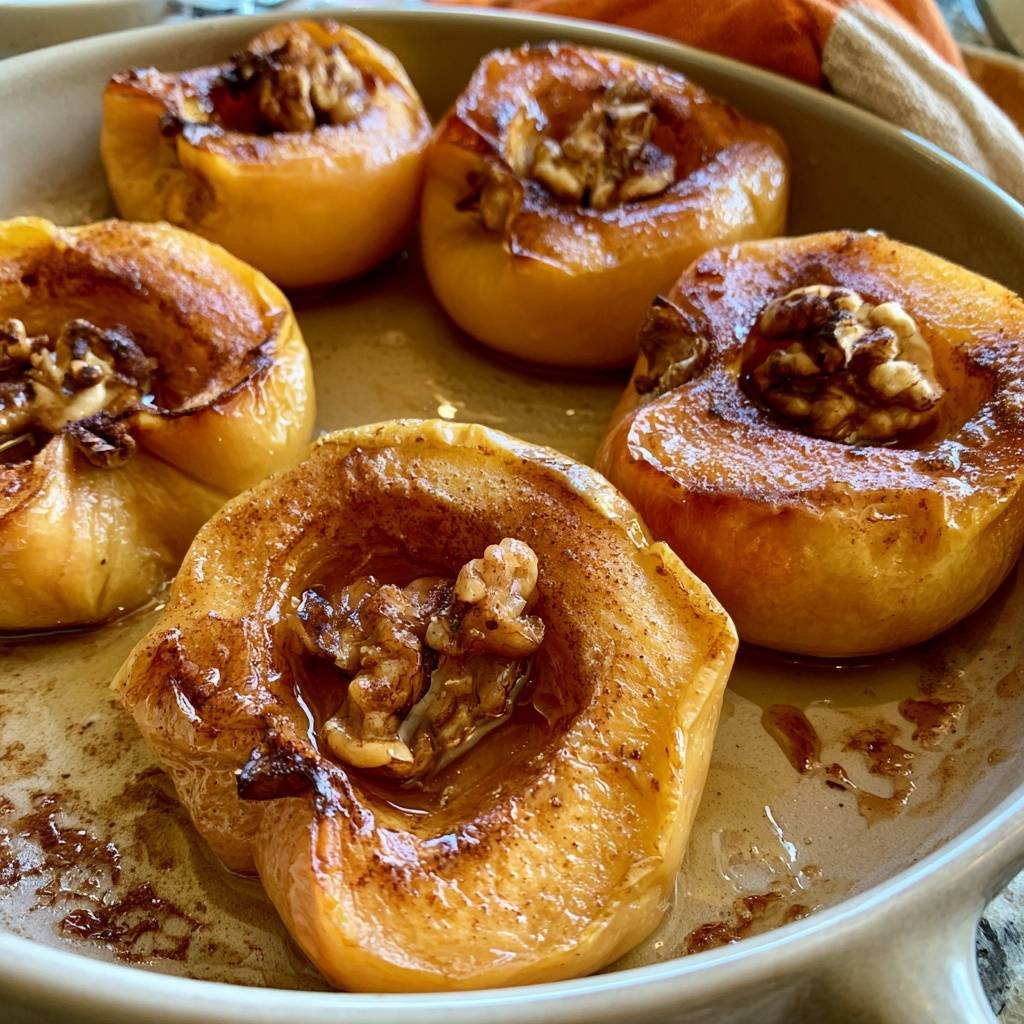
Honey Baked Quince with Cinnamon and Walnuts
This honey baked quince brings a cozy fall flavor to the table, with cinnamon and honey settling into the fruit as it softens in the oven. Walnuts tucked into the centers add a toasty, crunchy finish.
Quince starts out firm, so baking gently helps it become tender while the covered dish holds in moisture. The result is a simple side with sweet, tart, buttery pan juices to spoon over each half.
Why quince needs a little patience
Quince can look like an apple or pear, but it stays quite firm when raw. Scrubbing away its fuzzy coating and removing the core prepares the fruit to bake evenly, while leaving the halves intact gives the honey mixture and walnuts a natural place to collect.
Ripeness can vary, so use the knife test rather than relying only on appearance. Check the thickest part of a half: it should yield when tender. If it still feels firm after the covered and uncovered baking stages, cover the dish again and continue baking in the recipe card’s increments.
Build flavor in the hollows and pan juices
Honey brings sweetness, while fresh lemon juice adds a bright note that keeps the flavor from feeling too one-dimensional. Cinnamon lends warmth, and melted unsalted butter rounds out the mixture. A little kosher salt balances those flavors without taking over.
Spoon the mixture over the cut side of each half and let some settle into the hollows. Water poured around the fruit helps create moisture in the covered dish. Keep the foil snug so the quince can soften, then uncover it and baste with the pan juices to coat the tops as they brown.
Add walnuts near the end
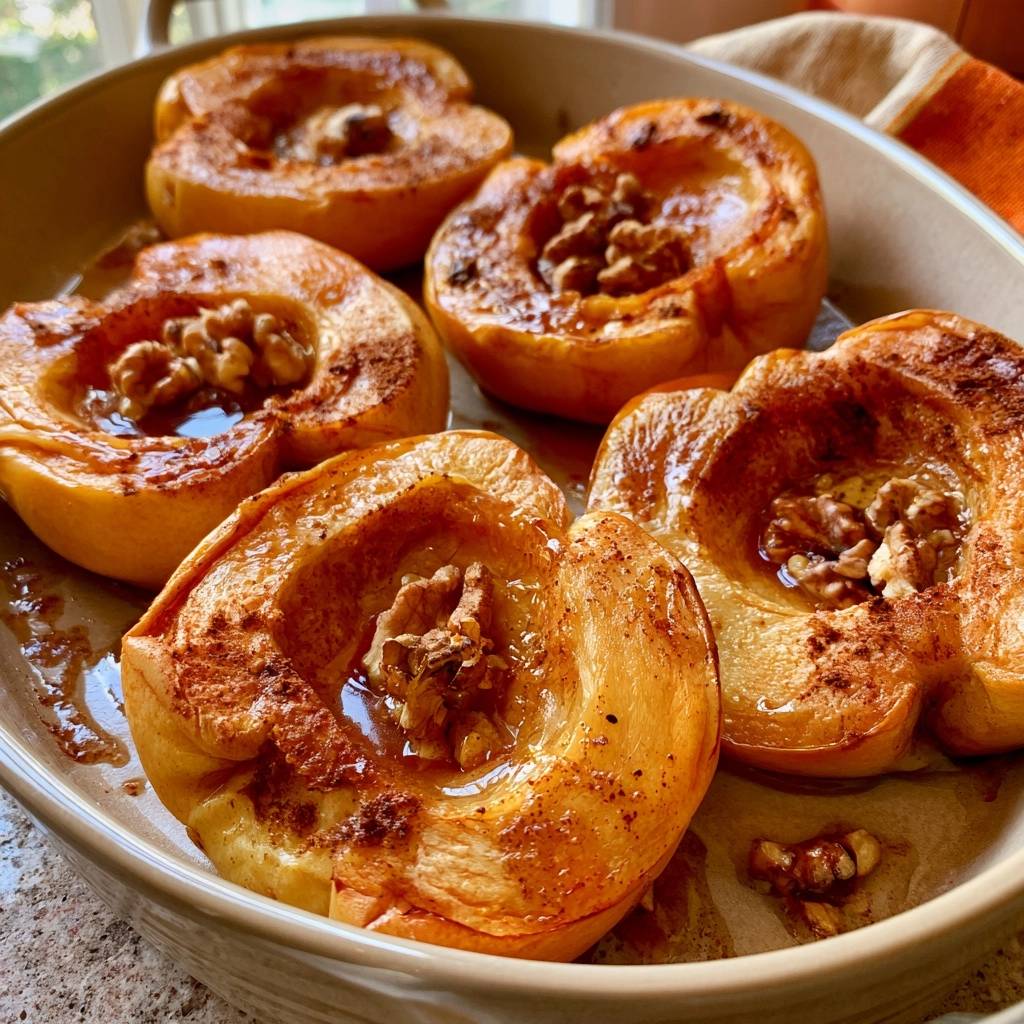
Chopped walnuts go into the hollows after the initial baking and basting. Adding them at this stage lets them finish with the quince while keeping their texture distinct from the soft fruit. Press them into the centers so they stay nestled in place as the dish goes back into the oven.
The quince is ready when it is tender and browned. Once it rests in the dish, spoon the remaining juices over the halves. That final coating brings the honey, butter, lemon, cinnamon, and fruit together in every bite.
Frequently Asked Questions
How can you tell when baked quince is tender?
Test the thickest part of a half with a knife. Tender quince should yield rather than feel stubbornly firm. If it needs more time after the covered and uncovered stages, cover the dish again and continue baking in the increments listed on the recipe card.
Why is the dish covered before baking uncovered?
The covered stage helps the firm fruit soften in the dish’s moisture. Uncovering it later exposes the quince to browning, and basting coats it with the honey and butter pan juices. Following both stages gives you tender fruit with a more browned surface.
When should you add the walnuts?
Add the chopped walnuts after uncovering and basting the quince, filling each hollow before its final bake. This timing lets the walnuts warm in the centers while retaining a texture that contrasts with the soft fruit.
Honey Baked Quince with Cinnamon and Walnuts
Course: Side DishCuisine: AmericanDifficulty: Easy4
servings15
minutes1
hour45
minutes330
kcal2
hours10
minutesQuince halves bake with honey, cinnamon, and butter, then finish uncovered with walnuts in their centers. Serve warm as a fall side dish.
Ingredients
4 large quince
1/3 cup honey
2 tbsp unsalted butter, melted
1 tbsp fresh lemon juice
1 tsp ground cinnamon
1/8 tsp kosher salt
1 cup water
1/2 cup chopped walnuts
Directions
- Heat the oven to 375°F. Scrub the fuzzy coating from the quince, halve them lengthwise, and scoop out the cores. Arrange the halves cut side up in a 9×13-inch baking dish.
- Stir together the honey, melted butter, lemon juice, cinnamon, and salt. Spoon the mixture over the quince, letting some collect in each hollow. Pour the water around the fruit, cover the dish tightly with foil, and bake for 75 minutes.
- Uncover the dish and spoon some pan juices over the quince. Bake uncovered for 20 minutes, basting once after 10 minutes. Fill the hollows with walnuts and bake for 10 minutes more, until the quince is tender and browned.
- Let the quince rest in the dish for 10 minutes, then spoon the pan juices over the halves before serving.
Notes
- Quince can vary in ripeness and baking time. Test the thickest part with a knife; if it is still firm after the covered and uncovered stages, cover the dish again and bake in 10-minute increments.