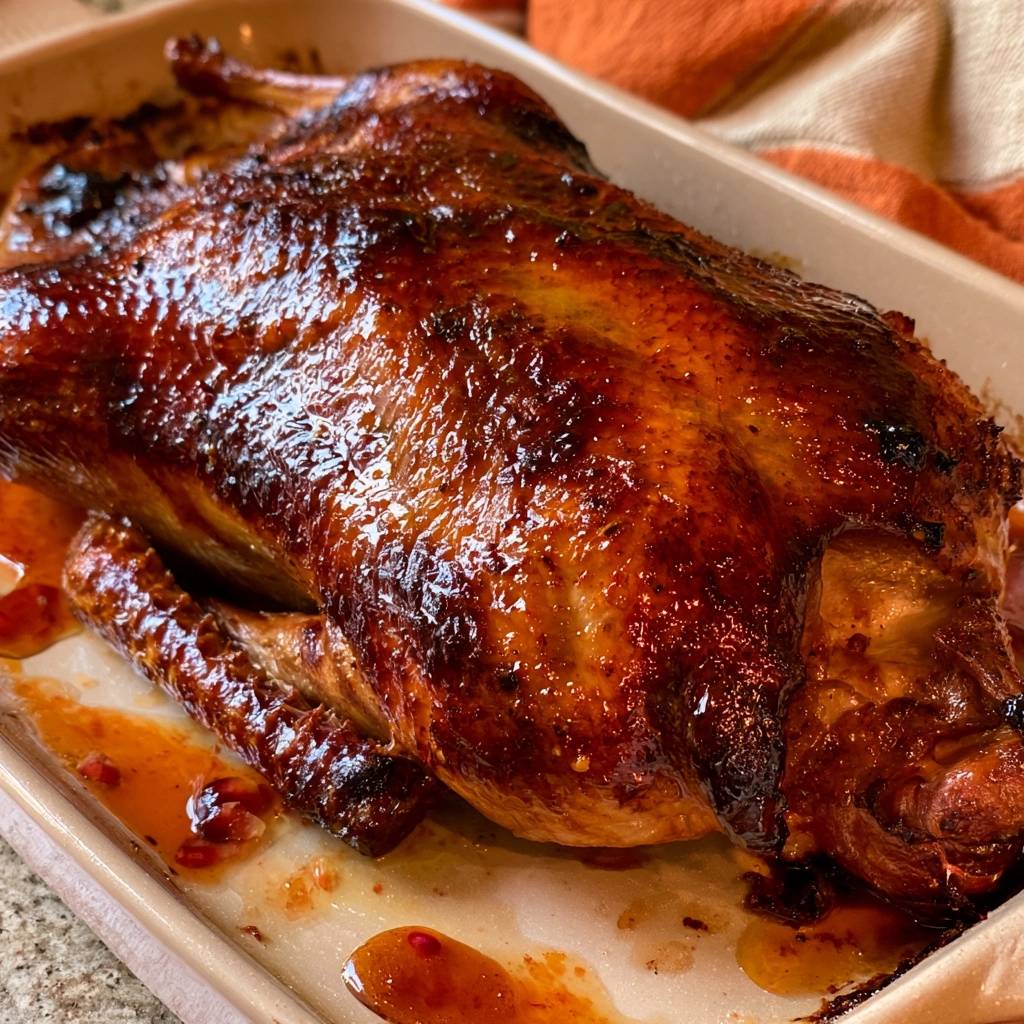
Crispy Roast Duck with Orange Pomegranate Glaze
This roast duck pairs crisp, deeply browned skin with a bright glaze made from pomegranate juice, orange, and honey. The fruit’s sweet-tart flavor complements the rich meat, while Dijon mustard and cider vinegar give the glaze a little savory edge.
The approach is straightforward: encourage the duck fat to render during roasting, then brush on the glaze near the end so its fruit and honey flavors finish the skin without taking over.
Prepare the skin for crispness
Patting the duck thoroughly dry helps the skin roast well. Prick it all over with a skewer, keeping the punctures shallow so fat can drain without piercing the meat. This distinction matters: the goal is to help the skin release fat while protecting the breast beneath it.
Set the duck breast-side up on a rack so it roasts above the fat that collects in the pan. Season the skin and cavity with kosher salt, black pepper, and dried thyme. Pour off accumulated fat carefully when needed during roasting; a deep pool can interfere with the skin’s contact with hot air.
Let the glaze balance fruit and richness
Pomegranate juice and orange juice form the fruity base, with orange zest adding a fragrant citrus note. Honey rounds out their tartness, while Dijon mustard and apple cider vinegar keep the glaze from tasting one-dimensionally sweet. Unsalted butter stirred in after simmering gives it a smooth finish.
As the mixture reduces, stir occasionally and watch for a thicker consistency. Glaze is meant to coat the duck, not run off like juice. Keep it off the heat once the butter is stirred in, then brush it onto the duck only toward the end of roasting. Applying it too early can make the honey darken before the skin has finished crisping.
Use temperature checks and rest before carving
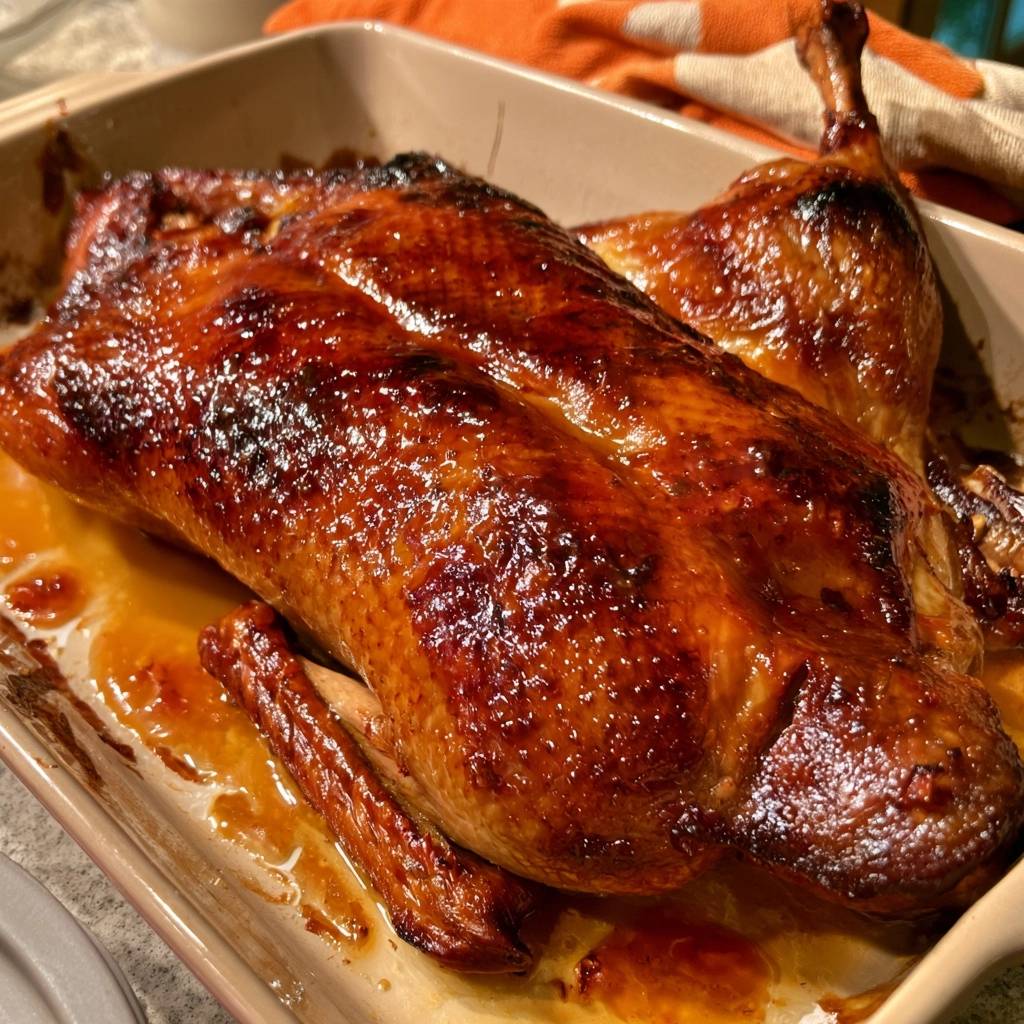
After pouring off the pan fat, the final high-heat roast brings color to the skin. Brush on the glaze during the last stretch, and check the thickest part of the breast and the thigh with an instant-read thermometer. Their readings help you judge doneness more reliably than appearance alone, since duck size and oven performance can vary.
If either area needs more cooking, continue roasting and check again. Once the duck is done, let it rest on a cutting board before carving. This gives you time to bring the remaining glaze to the table, where it can be served alongside the sliced meat.
Frequently Asked Questions
Why should I prick the duck skin before roasting?
Shallow punctures give rendered fat a way to drain as the duck roasts, helping the skin crisp. Keep the skewer from reaching the meat so you do not pierce the flesh. Patting the duck dry also supports a better-textured skin.
When should I brush the glaze onto the duck?
Brush it on during the final part of roasting, after the duck has spent time cooking without the glaze. The honey and fruit can brown quickly, so applying the glaze near the end helps it finish the skin without darkening too soon.
How can I tell when the duck is done?
Use an instant-read thermometer to check the thickest part of the breast and the thigh. The recipe card gives the target readings for each area. If either needs more cooking, continue roasting and check again rather than relying on skin color alone.
Crispy Roast Duck with Orange Pomegranate Glaze
Course: Main CourseCuisine: AmericanDifficulty: Medium4
servings20
minutes2
hours52
minutes900
kcal3
hours20
minutesA whole duck roasts until tender, then finishes at high heat with a sweet-tart glaze made from pomegranate juice, orange, and honey. Serve the extra glaze alongside the sliced duck.
Ingredients
- Duck
1 whole duck, 5 to 5 1/2 lb, giblets removed
2 tsp kosher salt
1 tsp black pepper
1 tsp dried thyme
- Orange pomegranate glaze
3/4 cup pomegranate juice
1/2 cup orange juice
1/4 cup honey
1 tsp finely grated orange zest
1 tsp Dijon mustard
1 tsp apple cider vinegar
1 tbsp unsalted butter
Directions
- Heat the oven to 300°F. Trim any excess fat from the duck, pat it very dry, and prick the skin all over with a skewer, taking care not to pierce the meat. Season the cavity and skin with the salt, pepper, and thyme. Set the duck breast-side up on a rack in a roasting pan.
- Roast for 2 hours and 15 minutes. Carefully pour off accumulated fat once during roasting if needed.
- During the roast, combine the pomegranate juice, orange juice, honey, orange zest, Dijon, and cider vinegar in a small saucepan. Simmer over medium heat for 12 minutes, stirring occasionally, until reduced to about 3/4 cup. Remove from the heat and stir in the butter.
- Carefully pour off the fat from the roasting pan, then raise the oven temperature to 425°F. Roast the duck for 25 minutes more, brushing it with glaze during the final 8 minutes. Check that the thickest part of the breast reaches 165°F and the thigh reaches at least 175°F; if needed, continue roasting in 5-minute increments.
- Transfer the duck to a cutting board and let it rest for 20 minutes before carving. Serve with the remaining glaze.
Notes
- Pricking the skin helps rendered fat drain during roasting; keep the skewer shallow so the meat stays juicy. Use an instant-read thermometer to check both the breast and thigh, since duck size and oven temperatures vary.