Cranberry Orange Panettone
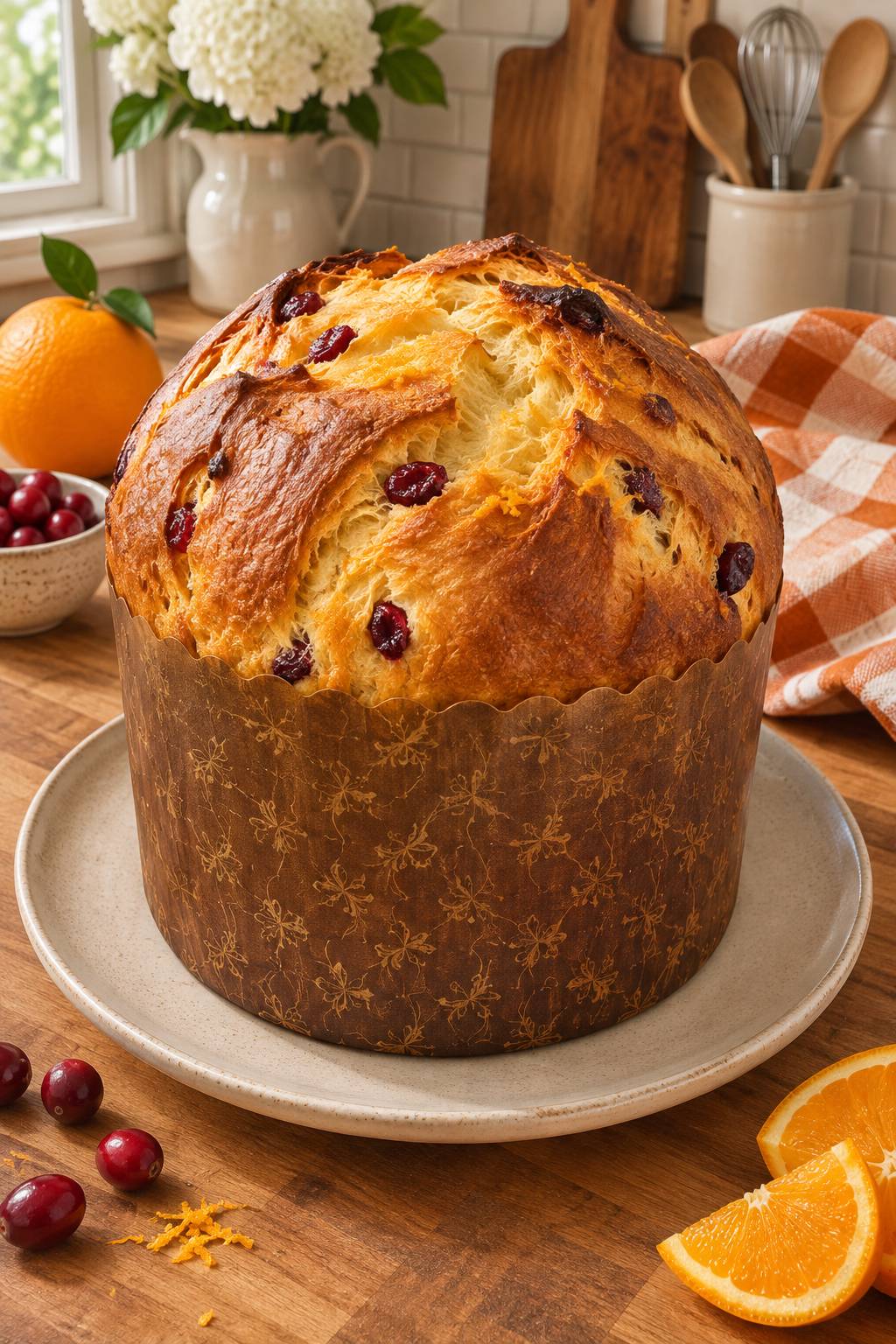
Panettone has a reputation for being intimidating, but this cranberry orange version is a rewarding holiday bake once you understand what the dough needs. It is an enriched yeast bread, rich with butter, eggs, and honey, and it bakes up tall and golden inside paper molds. Bright orange zest and tart dried cranberries keep every slice lively, so it feels like a celebration on the brunch table.
This guide explains the reasons behind the recipe card, so you can bake with confidence. You will see why the fruit is treated first, how flour affects texture, and where common mistakes happen.
Why Plumping the Cranberries Matters
Dried cranberries can be tough and sharp, and if they go into the oven dry, they tend to toast and turn leathery. Soaking them in warm orange juice first gives them a plump, moist bite that holds up through the bake. Once they are drained, patting them dry matters too, because excess liquid can make the dough sticky and weigh down the fruit.
A light toss in flour is the other trick. It helps the drained fruit cling to the dough instead of sinking to the bottom of the mold.
Choosing Flour and Reading the Dough
Bread flour is the better choice here, since it suits rich, long-rising dough. Its higher protein gives you a chewier crumb and a loftier rise. All-purpose flour will still work, but expect a slightly shorter loaf with a softer structure.
Flour absorption shifts with humidity, so you may need a little extra on some days. Add it gradually, only when the dough stays very sticky after kneading. You want soft and slightly tacky, not stiff. Too much flour is an easy route to a dense crumb.
Shaping, Rising, and Scoring for Height
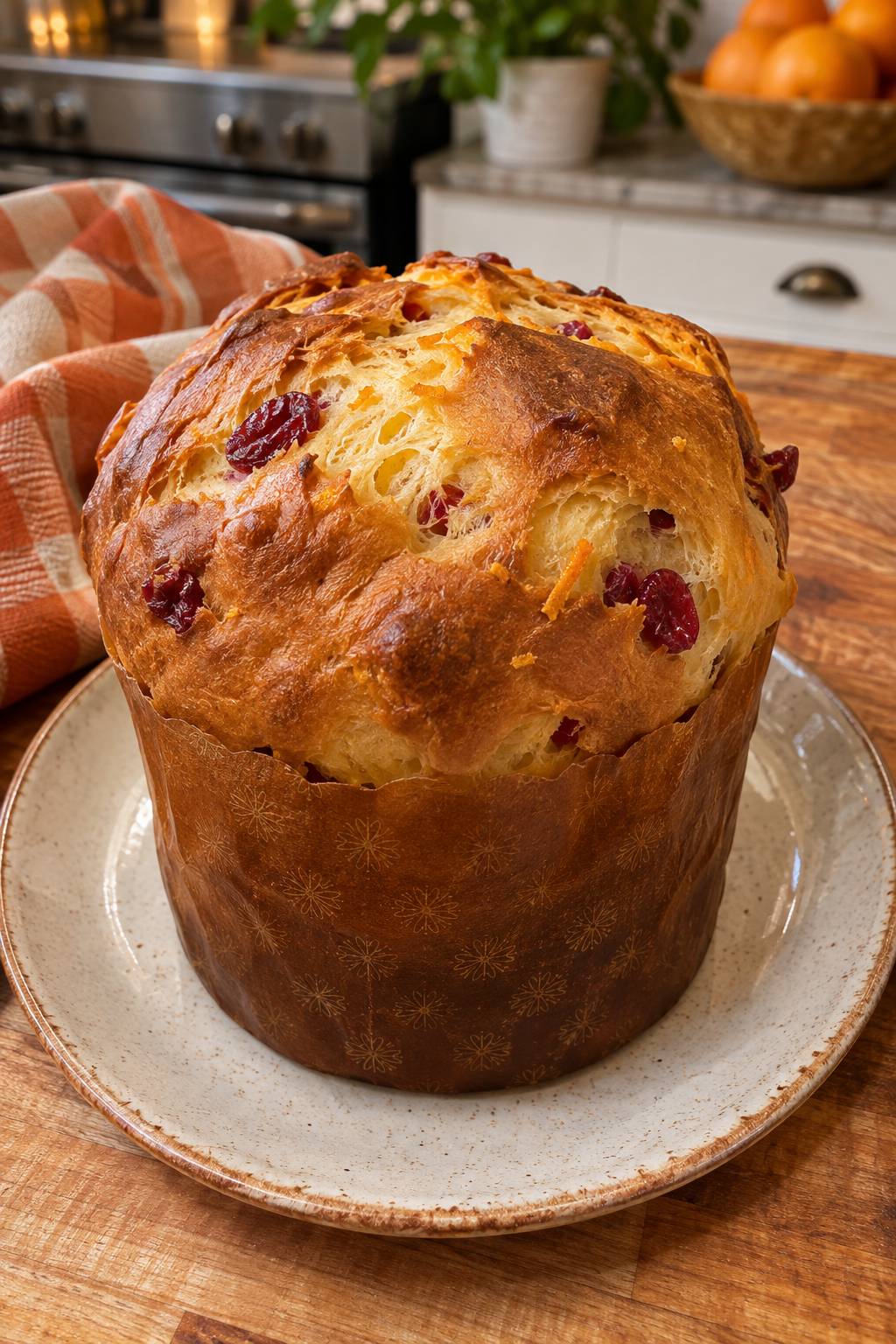
The dough rises twice, and each stage shapes the final result. Let it grow until doubled in a warm spot, then divide it, form each piece into a tight ball, and settle it into its mold. Pulling the edges underneath helps the loaf climb upward instead of spreading sideways. That shaping step does much of the work in getting a straight, tall loaf.
Before baking, brush the tops with an egg yolk and milk mixture for a deep golden shine, then cut a shallow X across each dome. A sharp knife or razor gives you a clean opening. Watch the color near the end of the bake. If the tops darken too quickly, a loose tent of foil protects them while the centers finish.
Cooling for a Tall, Soft Crumb
Patience at the end pays off. Let the loaves cool in their molds, then turn them upside down on a wire rack. This helps the crumb hold its height as it sets. Wait until they are fully cool before slicing, or the soft interior may squash under the knife.
Storage is simple, too. Wrap the panettone tightly in plastic wrap and keep it at room temperature so the crumb stays soft for the next few days. It also suits a brunch spread beside your holiday casseroles, or a thoughtful gift.
Frequently Asked Questions
Can I use all-purpose flour instead of bread flour?
Yes, all-purpose flour will still give you a tender, golden loaf. Bread flour is preferred because its higher protein gives a chewier crumb and a taller rise, so expect a slightly shorter result with all-purpose.
Why drain and dry the cranberries first?
Draining and patting the plumped cranberries dry keeps extra liquid out of the dough, so it stays soft and manageable. Tossing them in a little flour helps them stay suspended instead of sinking during baking.
What if my dough feels too sticky?
Keep kneading first, since the dough often turns smooth and glossy as it comes together. If it still feels very sticky, add flour in small amounts and knead after each addition. Stop once the dough feels soft and slightly tacky rather than stiff.
Cranberry Orange Panettone
Course: Breakfast, DessertCuisine: AmericanDifficulty: Medium16
servings40
minutes45
minutes240
kcal5
hours20
minutesThis homemade panettone is an enriched yeast bread studded with dried cranberries and orange zest, baked in paper molds for a tall, domed loaf with a soft, golden crumb. It makes two 6-inch loaves that slice well for holiday brunch or gifting.
Ingredients
- Cranberries
1 cup dried cranberries
1/2 cup orange juice, warmed
1 tbsp all-purpose flour
- Dough
3/4 cup whole milk, warmed to 110°F
2 1/4 tsp active dry yeast (1 packet)
1 tbsp granulated sugar
3 1/2 cups bread flour, plus up to 2 tbsp more if needed
1/2 cup granulated sugar
1 tsp fine sea salt
1 tsp vanilla bean powder
3 large eggs, room temperature
2 tbsp honey
2 tbsp finely grated orange zest (from about 2 oranges)
8 tbsp (1 stick) unsalted butter, softened and cut into pieces
1 tbsp olive oil, for greasing the bowl
- Egg wash
1 large egg yolk
1 tbsp whole milk
- For the molds
Two 6-inch panettone paper molds or 6-inch round tins
Parchment paper for lining
Directions
- Plump the cranberries
- Pour the warm orange juice over the dried cranberries in a small bowl. Cover and let stand for 15 minutes until plump. Drain well, pat dry with paper towels, and toss with the 1 tbsp flour so they are less likely to sink during baking.
- Activate the yeast
- Whisk the warm milk with 1 tbsp granulated sugar and the yeast in a small bowl. Let it stand for 10 minutes until foamy.
- Make the dough
- In the bowl of a stand mixer fitted with a dough hook, combine the bread flour, 1/2 cup sugar, salt, and vanilla bean powder. Add the yeast mixture, eggs, honey, and orange zest. Mix on low for 1 minute, then on medium-low for 6 minutes until a soft, sticky dough forms.
- Add the butter
- With the mixer on medium-low, add the softened butter one piece at a time, letting each piece blend in before adding the next. Knead for 8 minutes more until the dough is smooth, glossy, and stretchy. If it is still very sticky, add flour 1 tbsp at a time, up to 2 tbsp, and knead briefly after each addition.
- Add the fruit
- Add the drained cranberries and mix on low for about 1 minute, just until evenly distributed.
- First rise
- Lightly grease a large bowl with the olive oil. Shape the dough into a ball, place it in the bowl, and turn to coat. Cover and let rise in a warm spot for about 90 minutes, until doubled in size.
- Shape the loaves
- Line two 6-inch panettone molds or round tins with parchment paper. Gently punch down the dough and divide it in half. Shape each half into a tight ball by pulling the edges underneath, then place each in a mold.
- Second rise
- Cover the molds loosely and let the dough rise for about 60 minutes, until the domes sit about 1 inch above the rims.
- Glaze and score
- Preheat the oven to 350°F with a rack in the lower-middle position. Whisk the egg yolk with 1 tbsp milk, then brush over the tops of the loaves. Use a sharp knife or razor to cut a shallow X about 1/2 inch deep across each dome.
- Bake
- Bake at 350°F for 45 minutes, until deep golden and an instant-read thermometer inserted into the center reads 190°F. If the tops darken too quickly after 25 minutes, loosely tent with foil.
- Cool
- Let the loaves cool in their molds for 15 minutes. Then remove them from the molds and set upside down on a wire rack to cool for 45 minutes before slicing. Cooling upside down helps the crumb hold its height as it sets.
Notes
- Plumping the cranberries in juice keeps them moist so they do not dry out and toast in the oven, and tossing them in flour helps them stay suspended in the dough.
- Bread flour gives a chewier, higher-rising crumb. All-purpose flour will still work but may produce a slightly shorter loaf.
- Flour absorption changes with humidity, so add extra flour only as needed. The dough should feel soft and slightly tacky, not stiff.
- Once fully cooled, wrap the panettone tightly in plastic wrap and store at room temperature for up to 3 days to keep the crumb soft.