Classic Springerle Cookies with Anise
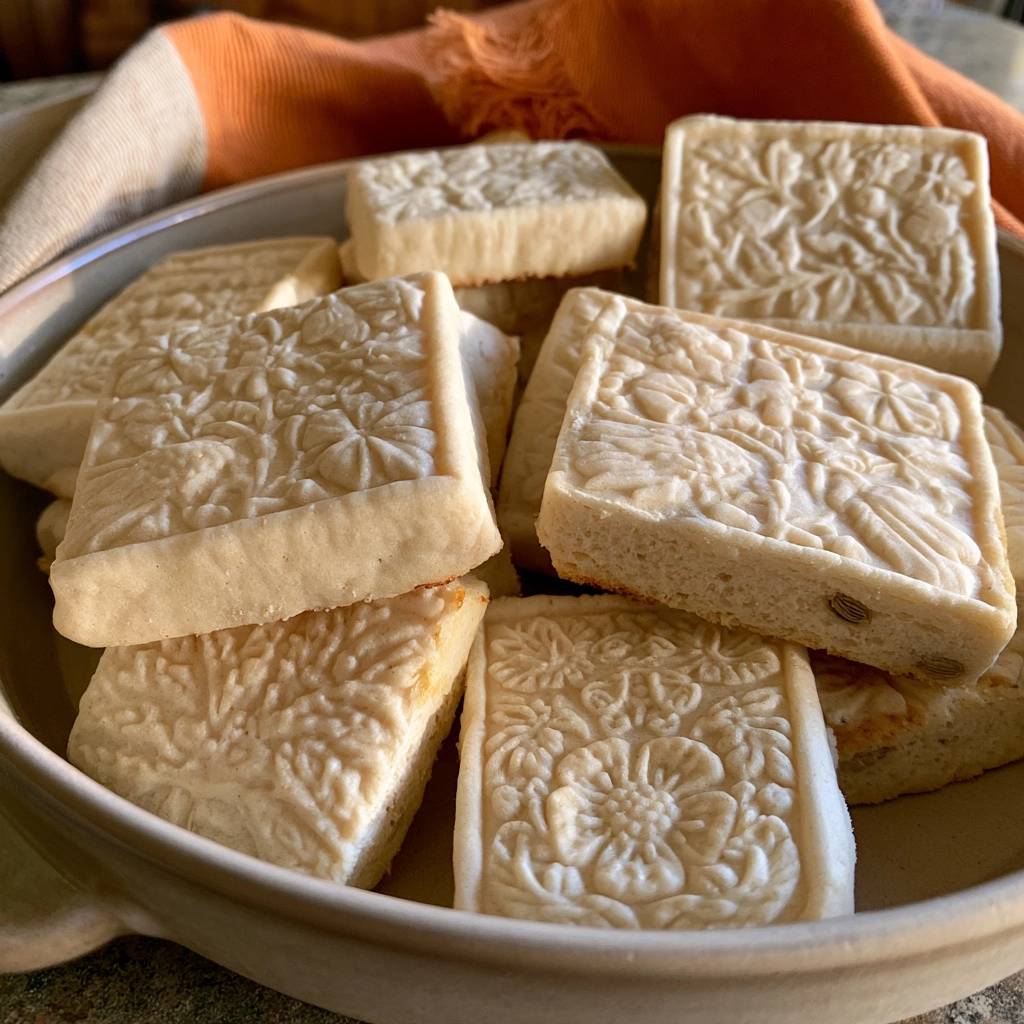
Classic springerle cookies bring together a distinctive stamped pattern and the gentle, aromatic flavor of whole anise seeds. Their pale tops keep the design easy to admire, while the bottoms turn lightly golden in the oven.
The dough’s texture and the uncovered rest are key to the finished cookies. With a little care as you mix, shape, and dry the dough, you can preserve the molded details and bake springerle with their characteristic firm yet tender crumb.
Build the dough for clear impressions
Room-temperature eggs beat more readily into the foamy base, and gradually adding the granulated sugar helps you reach the very pale, thick consistency the dough needs. Watch for ribbons falling from the beaters: that visual cue tells you the mixture has developed enough body before you add the dry ingredients.
Sifting the all-purpose flour with the baking powder distributes the leavening through the flour and helps keep the mixture light. Add the flour gradually on low speed so it can blend into the eggs without scattering. The last of the flour is easier to work in by hand; knead until the dough feels firm and no longer sticky. Keep the portion you are not shaping covered so it does not dry out while you work.
Press the mold for a distinct design
A lightly floured surface helps you roll the dough without adding more flour than it needs. Dust the springerle mold lightly, then press it firmly enough to leave a clear impression. Cut around each design into squares or rectangles, taking care not to flatten the pattern as you handle the pieces.
If dough clings to the mold, add a light dusting of flour before making the next impression. Too much flour can make the surface harder to manage, so use only enough to release the dough. Cover the remaining dough between portions to keep its texture workable.
Let the tops dry before baking
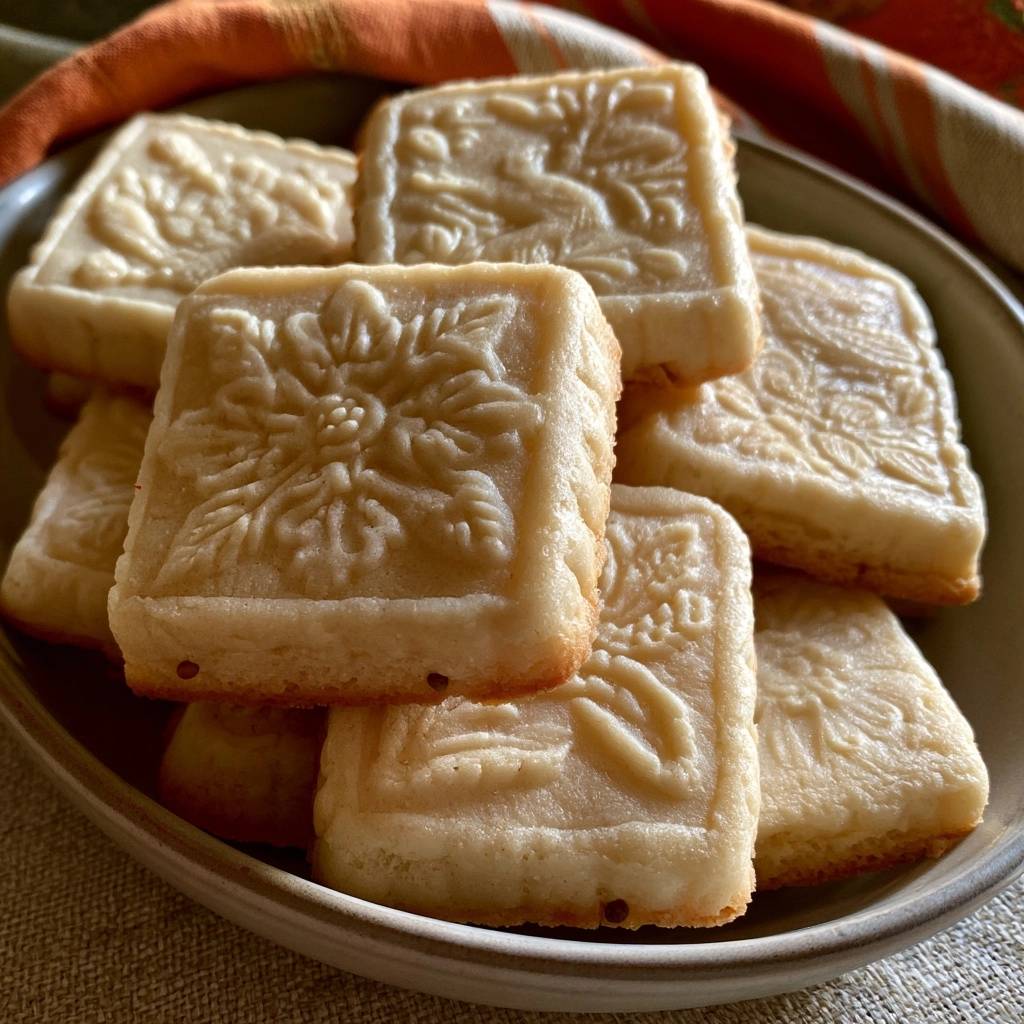
Anise seeds scattered on the parchment sit beneath the cookies as they bake, bringing their characteristic flavor to the bottoms. Leave space between the shaped cookies on the sheet so they are not crowded.
The uncovered rest lets the tops become dry to the touch before they go into the oven. This stage matters for the stamped pattern: a dry surface helps the design stay distinct as the cookies bake. If the tops still feel tacky, give them more time rather than moving on by the clock alone; the recipe card provides the timing guidance.
Look for pale tops and golden bottoms
Bake one sheet at a time and use the appearance of the cookies as your guide. They are ready when set, still pale on top, and lightly golden underneath. A deeply browned top would change the look that makes springerle recognizable.
Let the cookies cool on the baking sheet before transferring them to a rack to finish cooling. This gives the firm, tender crumb time to settle as the cookies cool. Follow the recipe card for the oven setting and baking and cooling times; the visual cues help you understand what you are aiming for.
Frequently Asked Questions
Why do springerle cookies need to dry before baking?
The uncovered rest dries the surface of the shaped dough. When the tops feel dry to the touch, the stamped pattern is ready for the oven. If they still feel tacky, let them continue drying rather than rushing to bake.
How can I keep dough from sticking to the springerle mold?
Lightly flour the mold before pressing it into the dough. If it begins to stick as you shape more cookies, dust it again. Use a light coating so the dough releases while the design remains clear.
What should finished springerle cookies look like?
The cookies should be set with pale tops and lightly golden bottoms. Their stamped designs should remain visible, and the crumb should be firm yet tender. Use those visual and texture cues along with the recipe card’s baking guidance.
Classic Springerle Cookies with Anise
Course: DessertCuisine: GermanDifficulty: Medium12
servings45
minutes15
minutes310
kcal9
hours10
minutesThese traditional German cookies are stamped with decorative designs and flavored with anise. They bake up pale with lightly golden bottoms and a firm, tender crumb.
Ingredients
- Cookies
4 large eggs, at room temperature
2 cups granulated sugar
4 cups all-purpose flour, plus more for dusting
1/2 tsp baking powder
1 tbsp whole anise seeds
Directions
- Sift the flour and baking powder together. In a large bowl or stand mixer, beat the eggs until foamy. Gradually add the sugar and beat on medium-high until the mixture is very pale, thick, and falls from the beaters in ribbons, about 10 to 12 minutes.
- Add the flour mixture a cup at a time, mixing on low. Knead in the last of the flour until the dough is firm and no longer sticky. Cover the dough while you work with each portion.
- On a lightly floured surface, roll the dough about 3/8 inch thick. Lightly flour a springerle mold, press it firmly into the dough to make a clear design, then cut around each impression into squares or rectangles.
- Line baking sheets with parchment and scatter the anise seeds over the paper. Set the cookies on top, leaving about 1 inch between them. Leave uncovered at room temperature for 8 hours or overnight, until the tops feel dry to the touch.
- Heat the oven to 300°F. Bake one sheet at a time for 15 minutes, until the cookies are set, the tops are pale, and the bottoms are lightly golden. Cool on the baking sheet for 10 minutes, then transfer to a rack to cool completely.
Notes
- If the dough sticks to the mold, dust the mold lightly with flour before each impression.